What's On
Menu
In this course we will explore the Apostle Paul, and the theological vision that we find in his letters. All sorts of issues emerge once we start doing this: how did Paul understand himself, as an apostle, given that he almost certainly never met the earthly Jesus? How did he understand God’s involvement in history, and in revelation? Who is Christ, for Paul, and what does it mean for believers to be ‘in Christ’; what does it mean for Christ to be ‘in us’? We will also need to look at how Paul understood the calling of Christian communities, and what he expected of Christ-followers in those communities (in other words, his ethics).
As part of the course you will have opportunity to study key passages from Paul’s letters; to consider some of the issues and approaches in the contemporary study of Paul; and to consider our own response to Christ, in the light of Paul’s thought.
Below is a brief outline of the course. Information about the session is followed by suggested reading, which includes: 1) Key texts from Paul’s letters, 2) an introduction to the particular letter in focus and 3) some further reading on the topic. The latter two are not essential, but please do try to read the Pauline texts before our Thursday sessions. The New Testament translation we will be using is the New Revised Standard Version (NRSV) available on www.biblegateway.com. This is a very user-friendly site which has many different translations of the Bible as well as a search feature.
Will the real Paul please stand up? Who was Paul? How did he understand his call/conversion and his mission? How can we interpret his writings?
Reading:
1) The Letter to the Galatians.
2) L.T. Johnson, The Writings of the New Testament: An Interpretation, London: SCM Press 1999, pp 327-342.
3a). C.ROWLAND, Christian Origins, London: SPCK 2002, pp205-212.
3b) K. HAACKER, ‘Paul’s Life’ in The Cambridge Companion to St. Paul ed. J.D.G. Dunn, Cambridge CUP 2003 pp19-33
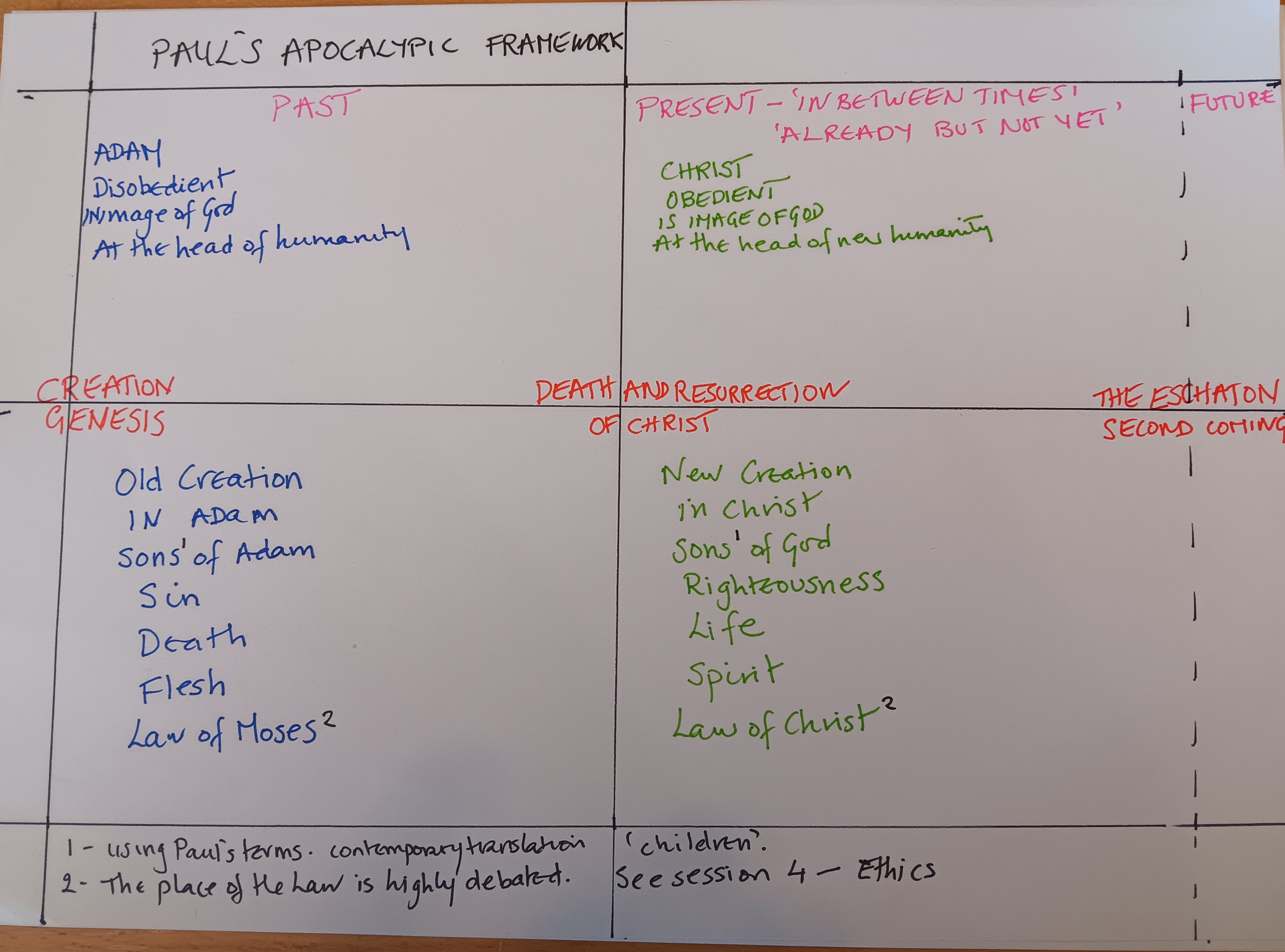
Apocalyptic seems like a difficult work, but actually simply means Revelation. It is not solely about the end of the world, but implies a world view in which God intervenes directly into the world to bring about his final (eschatological) plan. We will see how this is the framework within which Paul experiences God and understands what He has done in Christ.
Reading:
1) Romans 8; 1 Corinthians 15.
2) R. JEWETT, ‘Romans’ in The Cambridge Companion to St. Paul ed. J.D.G. Dunn, Cambridge CUP 2003 pp 91-104.
3) C.ROWLAND, Christian Origins, London: SPCK 2002, pp 54-61. 1
How did Paul understand the person of Jesus – he probably never met him physically, so a bit different from the gospels. And how did he understand the salvation that Jesus brought about by his death and resurrection?
Reading:
1) Romans 5; The Letter to the Philippians.
2) R. Brown, An Introduction to the New Testament, London: Doubleday 1993, 483-501.
3) M.J. Gorman,‘ What did Paul think God is doing about what’s wrong?’ in The New Cambridge Companion to St. Paul ed. B. Longenecker, Cambridge: CUP 2020, 187 -209.
Paul’s theology wasn’t just about ideas and beliefs; it was about faith, which implies practice as well. How did Paul expect his communities to live? What was his moral Compass? Or to put it in contemporary language – how can we understand Paul’s ethics and spirituality?
Reading:
1) Galatians 5-6; Romans 12-14; 1 Corinthians 8-13; Philippians 2.
2) L.T. Johnson, The Writings of the New Testament: An Interpretation, London: SCM Press 1999, pp 295-312.
3) M.Hooker, Paul: A Short Introduction, Oxford: One World Publications pp 120-133
How can we interpret the letters of Paul for our day? The social sciences have shed light on the social nature of the Pauline communities. Studies of empire and imperialism have uncovered the critique of Rome implicit in Paul’s letters; and feminist and liberationist interpretations urge us to read the texts from the viewpoint of the marginalised and oppressed. We will consider what these letters have to say to our time.
Session 1
Session 2
Session 3
Session 4
Session 5
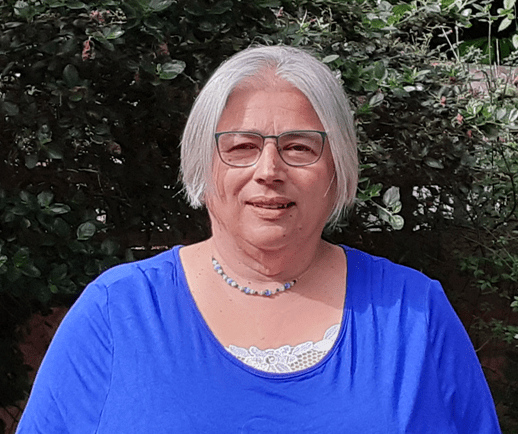
Josette is a member of the Institute of the Blessed Virgin Mary. She works as a spiritual director at Loreto Spirituality Centre, in Llandudno. She researched in New Testament studies as a postgraduate at the University of Cambridge.